Welcome to the November Mini-Retreat

preparation
A restorative retreat doesn’t require a getaway, just a small window of intentional time. This self-paced mini-retreat is designed to move at your rhythm and fit your schedule. Here are a few considerations to get the most out of the time you’ve set aside.
Reserve 30 minutes to one hour on your schedule. If you want to complete the Creative Project at the same time, you might double that. Settle into a quiet corner of your house, preferably away from laundry, dishes, and distractions.
Light a candle, or switch on a lamp rather than a bright overhead light.
Turn on a soft background playlist. If you need inspiration on Spotify, search for playlists with keywords like Classical in the Background or Piano Hymns.
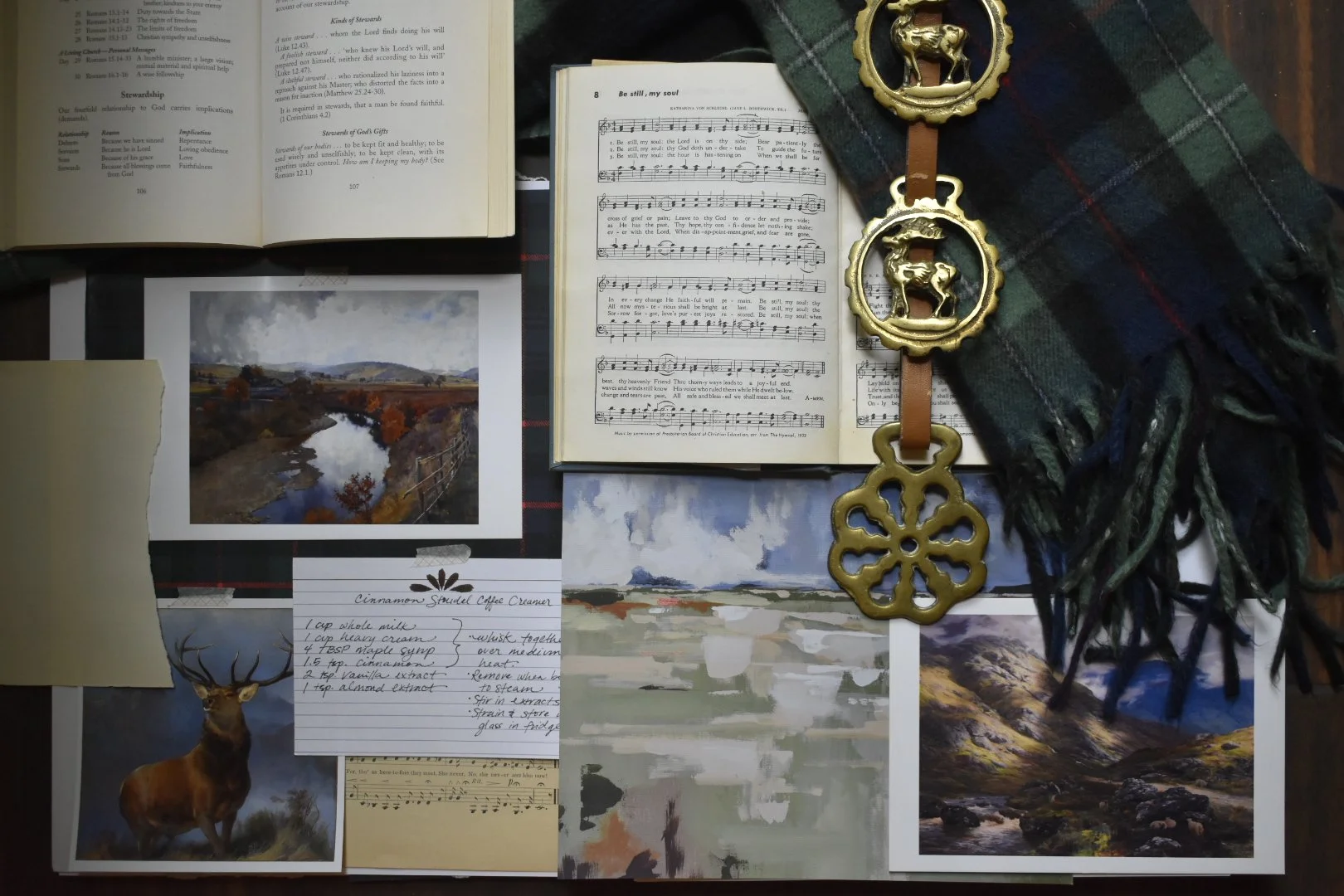
In addition to a glass of water, prepare a cup of coffee or tea if you’d like. For a Fall touch, try making this delicious homemade coffee creamer from the handwritten recipe card below.
If possible, silence your phone or set it aside. This is a time to refill and restore. On that note, I’ve also tried to keep links on this retreat page to a minimum. Sending you all over the web and back again does not sound like a peaceful way to recharge.
Please note that a few of the sections have computer-generated audio recordings available if you’d rather listen than read.
Gather your supplies:
Journal & pen/pencil
Items for the Creative Project, listed below in that section
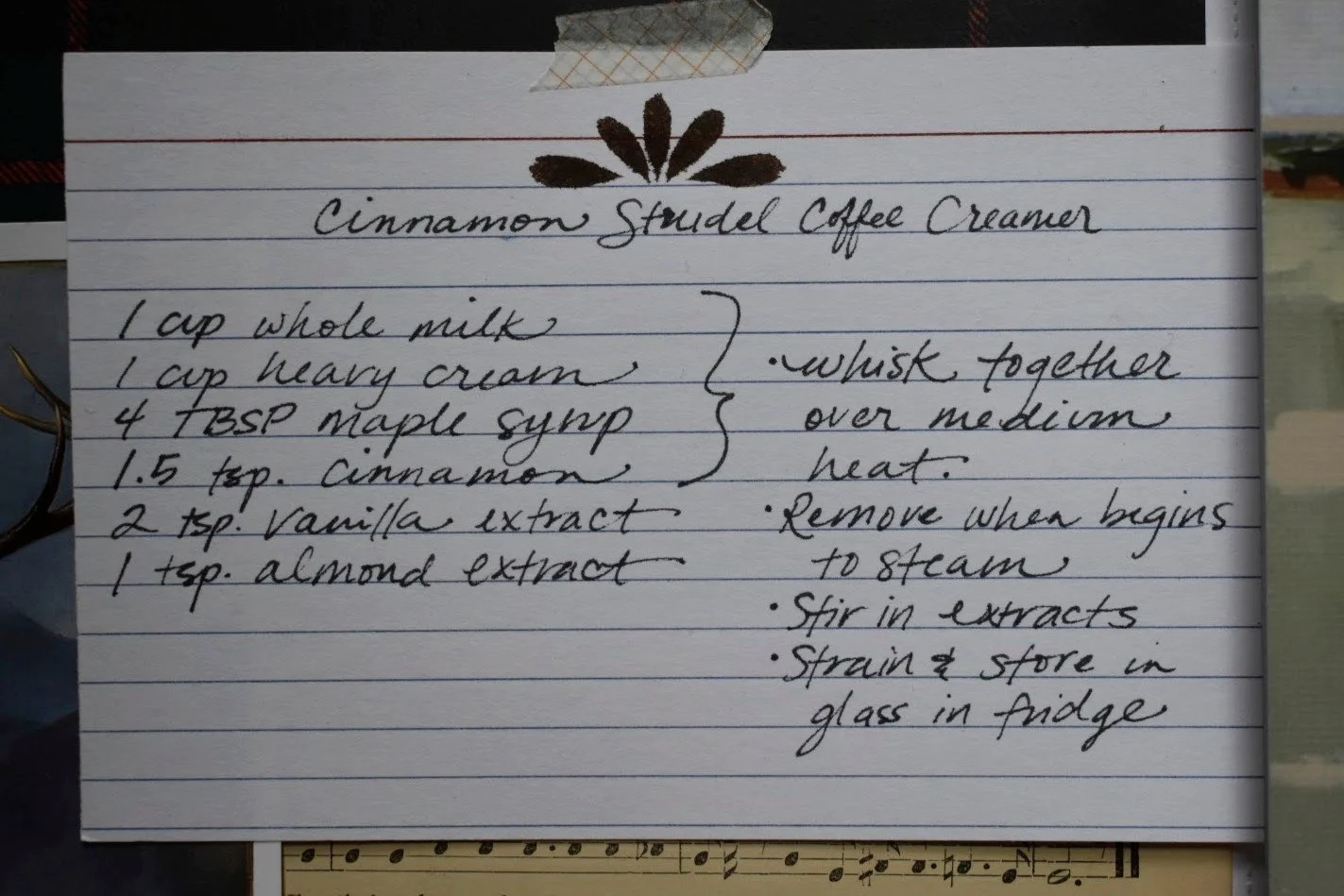
Recipe adapted from the Deliciously Organic cookbook by Carrie Vitt
Prayer
Hymnal
Art Gallery
Scripture: Stewardship
Pilgrimage Journey
Studio Table
Monthly Reset
Walk
Retreat Rhythm
A collection of beautiful things
theme
Simplicity, & Holland
prayer
Begin with a deep breath. Let’s join together to pray the words of Christ, embracing thoughtful recitation and allowing each line to shape how we view the day ahead.
The Lord’s Prayer
Our Father, who art in heaven,
hallowed be thy name;
thy kingdom come;
thy will be done;
on earth as it is in heaven.
Give us this day our daily bread.
And forgive us our trespasses,
as we forgive those who trespass against us.
And lead us not into temptation;
but deliver us from the evil one.
For thine is the kingdom,
the power and the glory,
for ever and ever. Amen.
from Matthew 6 and Luke 11
Response
Consider writing out the prayer.
Record any thoughts that are sparked as you pray.
Breathe deeply again before moving on to the Hymnal.
Hymnal
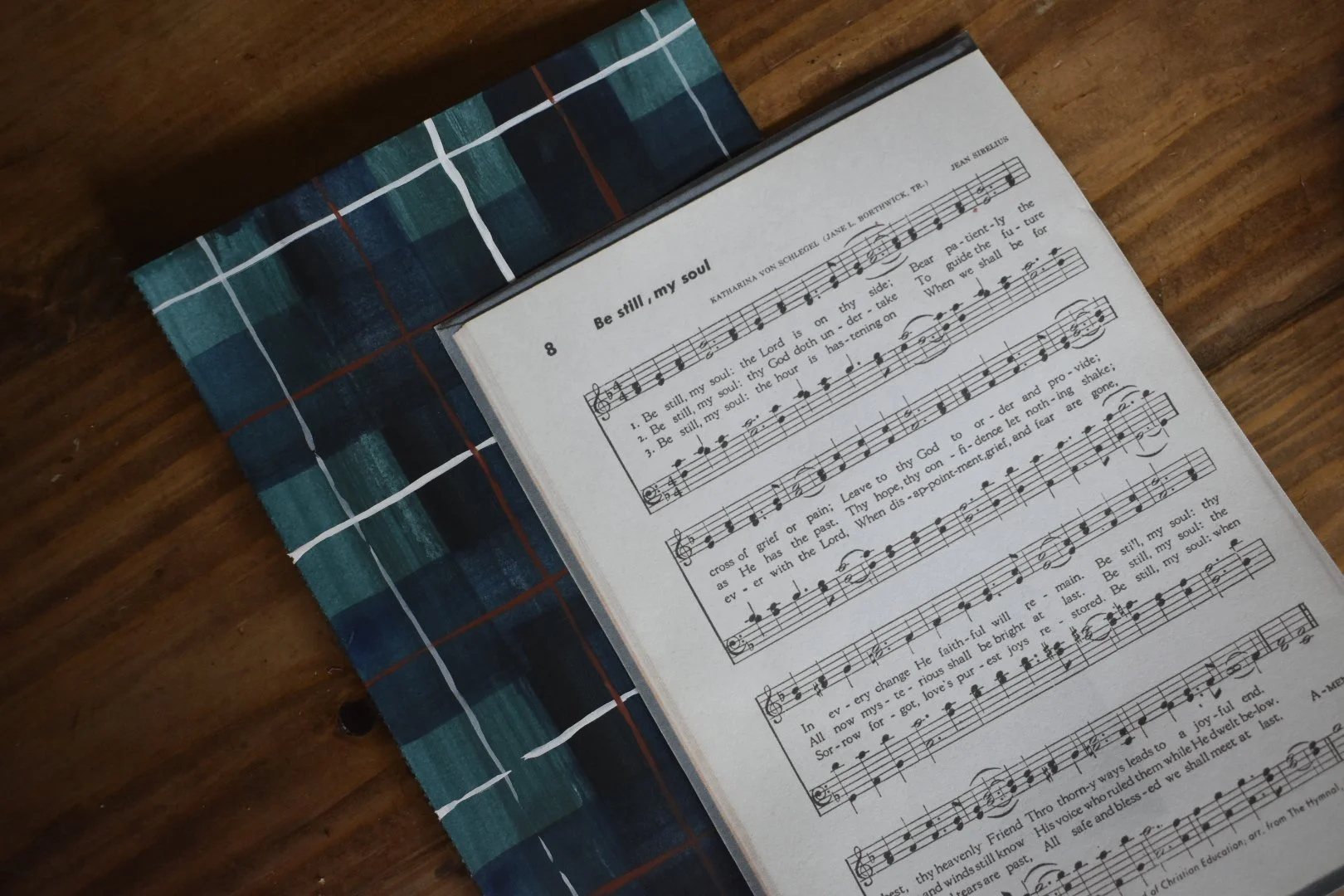
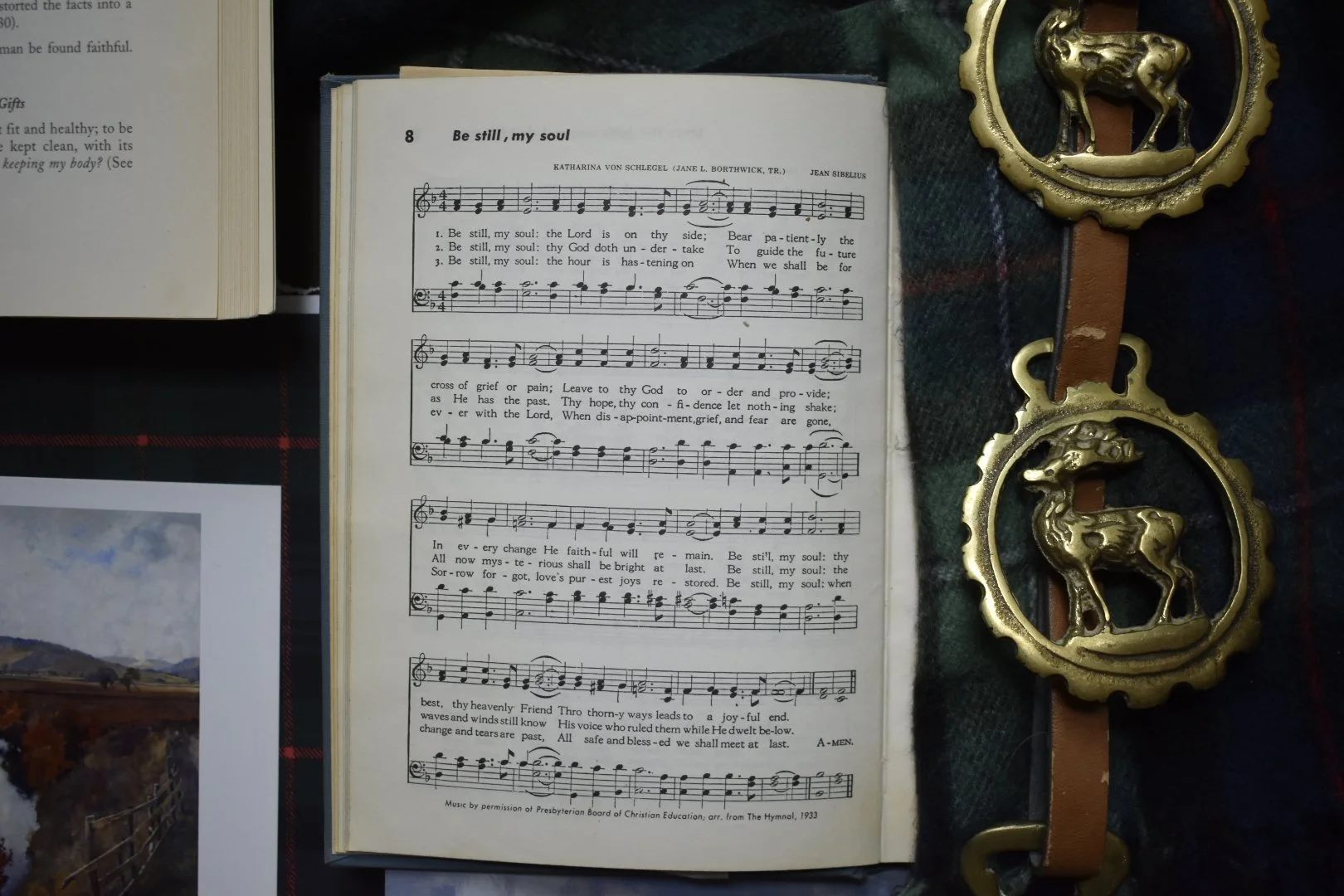
Be Still My Soul
by Katarina von Schlagel, 1752, Germany
Translated by Jane L. Borthwick, 1855, Scotland
Above there are two versions of the song. Choose one or both and sing along, using the lyrics below. Afterward, we’ll read a bit about the hymn.
Be still, my soul! the Lord is on your side;
Bear patiently the cross of grief or pain;
Leave to your God to order and provide;
In ev'ry change he faithful will remain. Be still, my soul! your best, your heav’nly friend
Thru' thorny ways leads to a joyful end.
Be still, my soul! your God does undertake
To guide the future as he has the past;
Your hope, your confidence, let nothing shake;
all now mysterious shall be bright at last.
Be still, my soul! the waves and winds still know
His voice who ruled them while he lived below.
Be still, my soul! when dearest friends depart
And all is darkened in the vale of tears,
Then shall you better know his love, his heart,
Who comes to soothe your sorrow and your fears.
Be still, my soul! your Jesus can repay
From his own fullness all he takes away.
Be still, my soul! the hour is hast'ning on
When we shall be forever with the Lord,
When disappointment, grief, and fear are gone,
Sorrow forgot, love's purest joys restored.
Be still my soul! when change and tears are past,
All safe and blessed we shall meet at last.

Take a moment to read the corresponding scripture.
Psalm 46:10
“Be still, and know that I am God.
I will be exalted among the nations,
I will be exalted in the earth!”
Psalm 37:7
Be still before the Lord and wait patiently for him;
fret not yourself over the one who prospers in his way,
over the man who carries out evil devices!
Psalm 62:5
For God alone, O my soul, wait in silence,
for my hope is from him.
Click play if you’d prefer to listen along to this section.
For those who know the strains of severe emotional and circumstantial uncertainty, they know saying “be still my soul” is easier said than done. But here is where the grip is loosened and the burdens handed over to the One who says I will carry them for you. Often, our trials are where the rubber meets the road, the place we decide how we will bear them.
A Bit of Historical Background
This beautiful hymn introduces us to two women from different countries and centuries.
Its author would surely have been surprised to hear her lyrics still sung, written by candlelight over 300 years ago. Katarina von Schlagel lived in Germany in a time when death blanketed the streets. Her small village likely gathered for funerals at least once a week, the church bells tolling with every new passing. While the reality of another death might not have been as startling as it is for us today, it was just as sobering. Children were born and loved and buried. So to read the lyrics of Katarina’s hymn while considering the reality in which she lived is enough to bolster a frail heart.
Be still, my soul! The hour is hast'ning on
When we shall be forever with the Lord,
When disappointment, grief, and fear are gone,
Sorrow forgot, love's purest joys restored.
Be still my soul! when change and tears are past,
All safe and blessed we shall meet at last.
100 years after Katarina wrote the song in German, a Scottish woman from Edinburgh, Jane Borthwick, read it and worked to translate it into English, along with a host of other German hymns. Though it’s doubtful she would have embraced being called such, she was a philanthropist and reformer, heavily involved in the Edinburgh House of Refuge, supporting homeless and vulnerable people in her city. Jane preferred to remain anonymous throughout her life as a writer, using the pseudonym H. L. L. for poems, stories, and songs.
And here is a picture of two faithful women, living unseen, quiet lives. They used their creativity, fueled by spiritual conviction and devotion, and their small offerings continue to bless us centuries later.
Response
What is causing my soul to lack stillness today? What issue or concern is agitating me or leaving me full of angst?
How might I support a friend or neighbor whose life has been recently shaken?
Journal any thoughts you have, or record a few favorite lyrics.
Take a deep breath before heading on to the Art Gallery.
art gallery
The Hind’s Daughter
by Sir James Guthrie, 1883
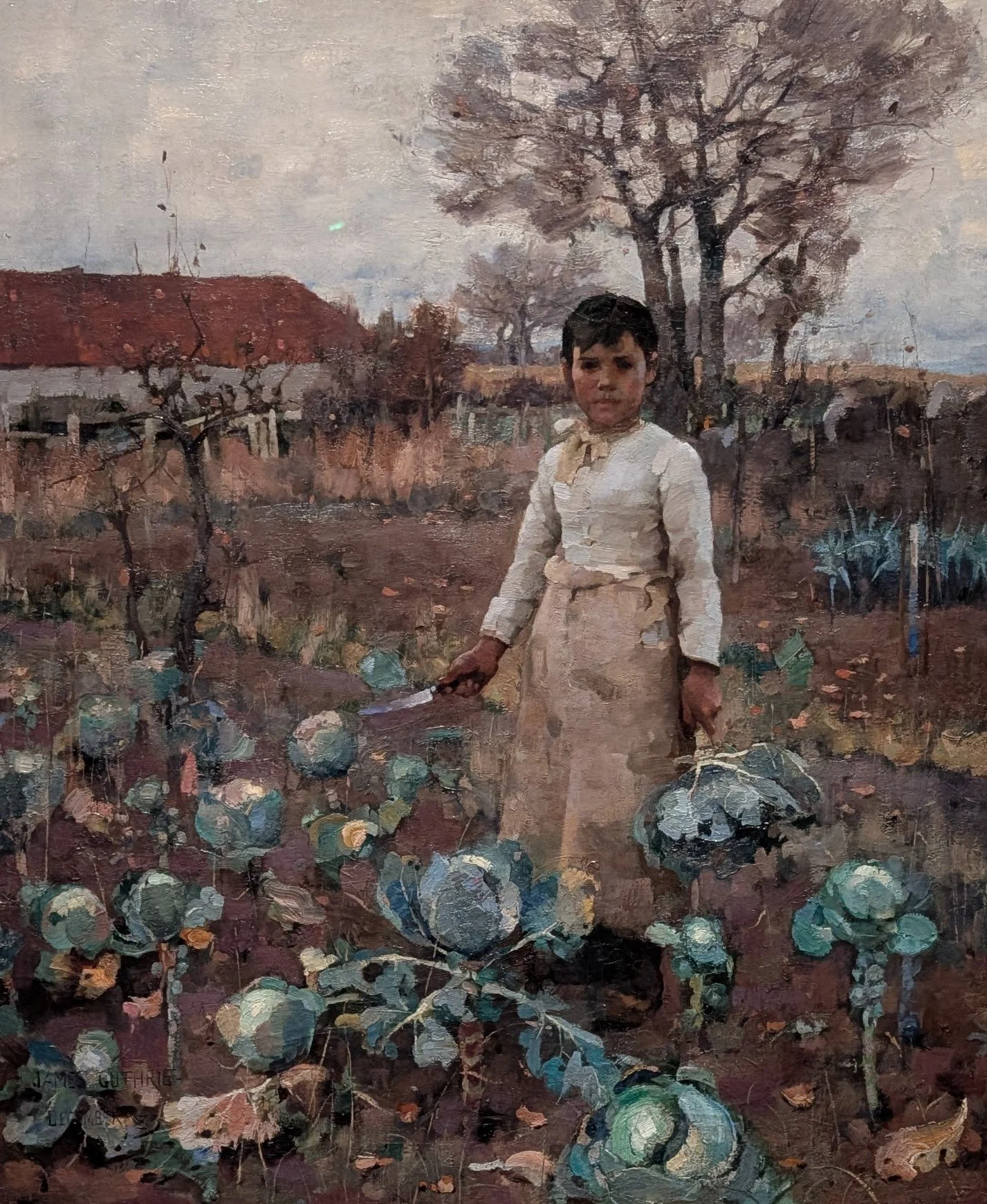
If we visited the National Galleries of Scotland, we’d first glimpse a section of this striking painting as a banner near the entrance. Moving further into the gallery, we’d eventually find the real thing. Standing right in front of it, or looking at the image here, we can take a moment to consider what we think. Even if we aren’t art critics or connoisseurs, there’s no reason to feel intimidated by art. While there are countless ways to approach a painting, a great place to start is simply asking:
Why (or why not) is this beautiful? What feeling does it stir in me? What might the artist have been trying to convey through their work?
We might reply with thoughts like:
It feels very sure-handed. The strokes are bold and certain.
The subject matter is real and hard, rough around the edges, rather than a pristine Victorian scene.
The color palette is composed of peaceful earthtones.
Or maybe your impression is entirely different. That’s the beauty of art!
The Hind’s Daughter: The painting is by James Guthrie. He preferred painting “en plein air,” or outside, which was less common in his day, though gaining popularity. He found this young worker as he was out among the fields. “Girl and landscape seem inextricably merged in this essentially Scottish scene. A hind was a skilled farm labourer, and leafy greens (or kail) a staple diet of Scottish hinds and their families.” (source)
James was mostly self-trained (anyone can be an artist!), leaving his law studies at Glasgow University to pursue art. He leaned toward real-life scenes others might have considered unrefined — gypsy campfires, field laborers, and shepherds were among his subjects.
His work resonated, and in his later years he was one of Britain’s most sought-after portrait artists, president of the Royal Scottish Academy, and soon after, a knight.
How does this painting strike you?
For more on this painting and the artist, head over HERE after your retreat.
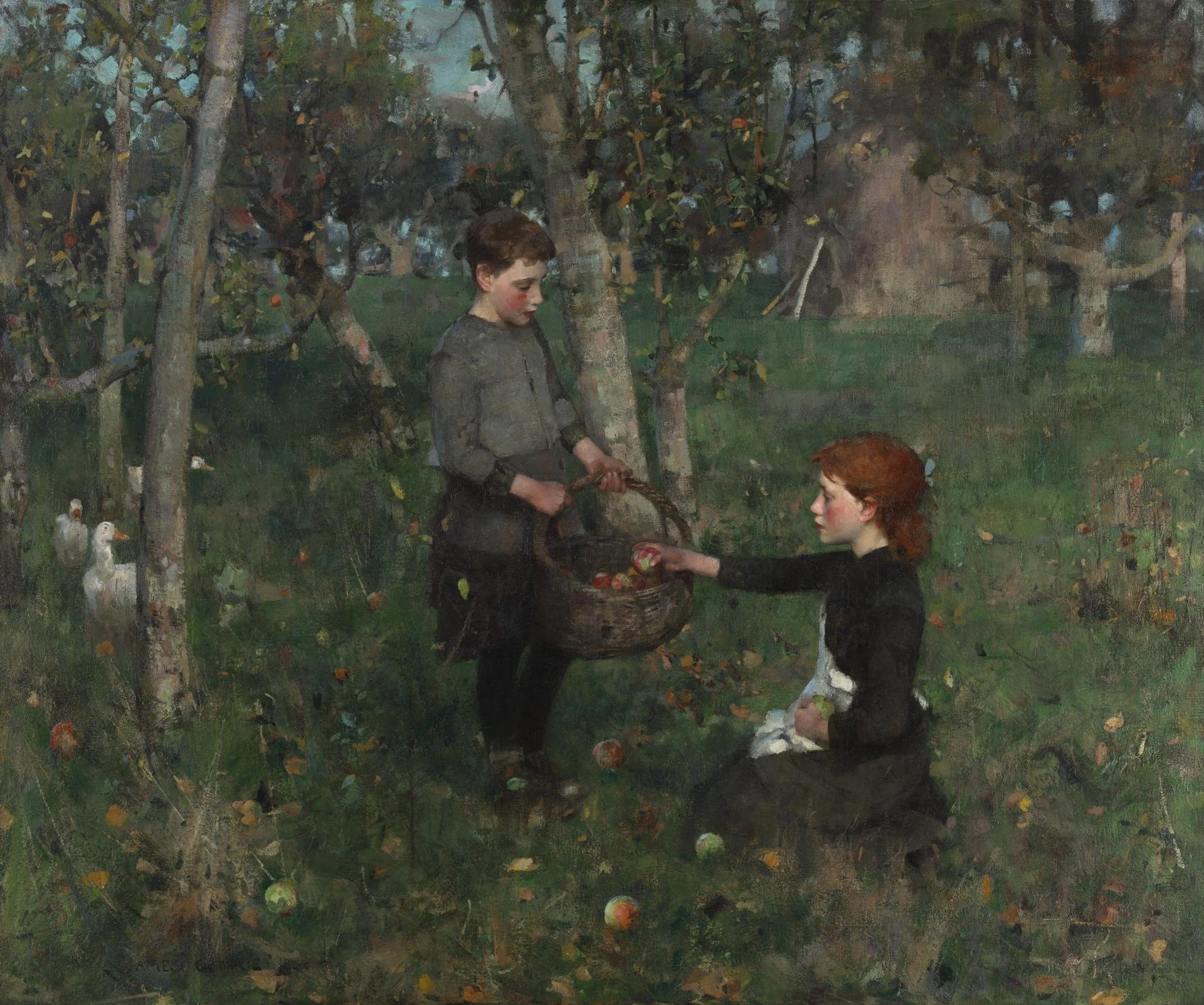
Another of his paintings:
In the Orchard by Sir James Guthrie | National Galleries of Scotland
Response
How does this painting strike you?
Journal any thoughts you have. Perhaps you’d like to view more similar art this month, or share this piece with your family.
Pause for a moment before moving forward.
Simplicity, from Ellen DeKroon Stamps
Above is an audio version for those who prefer to listen.
Serving while Weak
Using the least equipped
RESPONSE
How might I approach my home today through the lens of stewardship?
If you’d like, record some of the scripture references or jot down your thoughts on stewardship.
Take a breath and drink some water before we shift to our outing and our art project.
Pilgrimage
Standard retreats offer the chance to step into a new environment, which in turn sparks creativity and curiosity. We are at home today, which we love, but how about a quick virtual trip to a new spot? You never know how it might inspire your art, the stories you tell at bedtime, or even future travels.
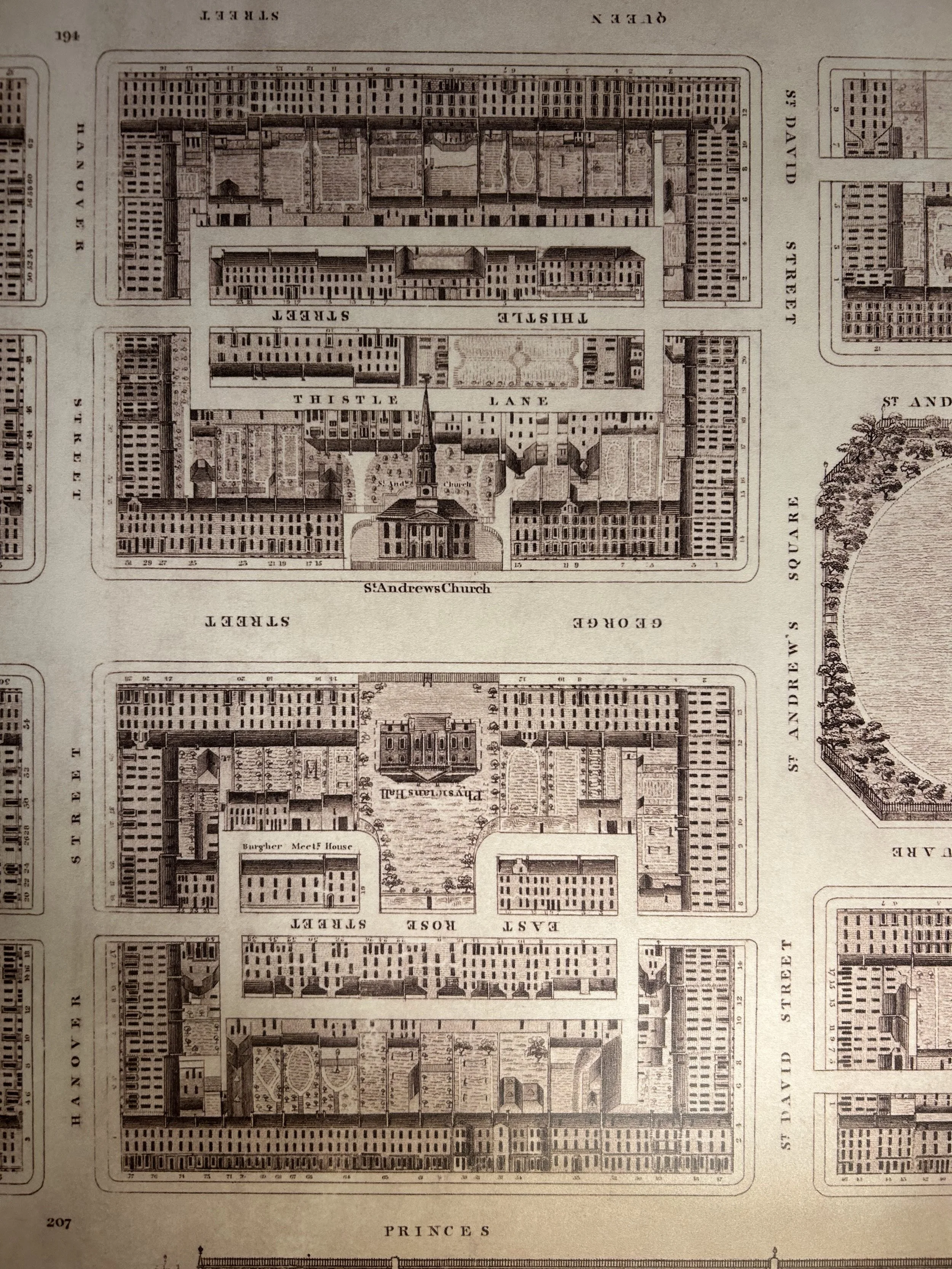


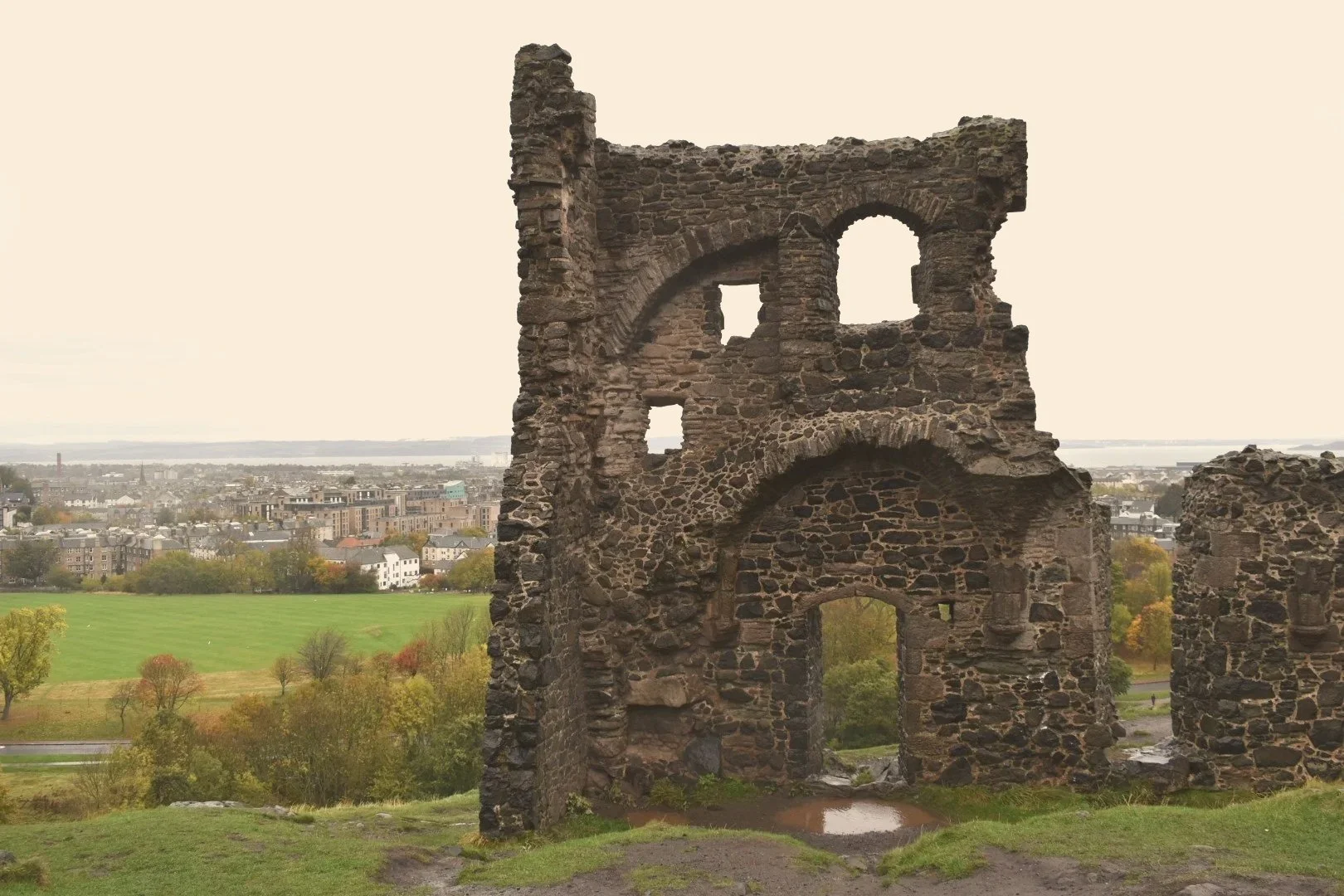

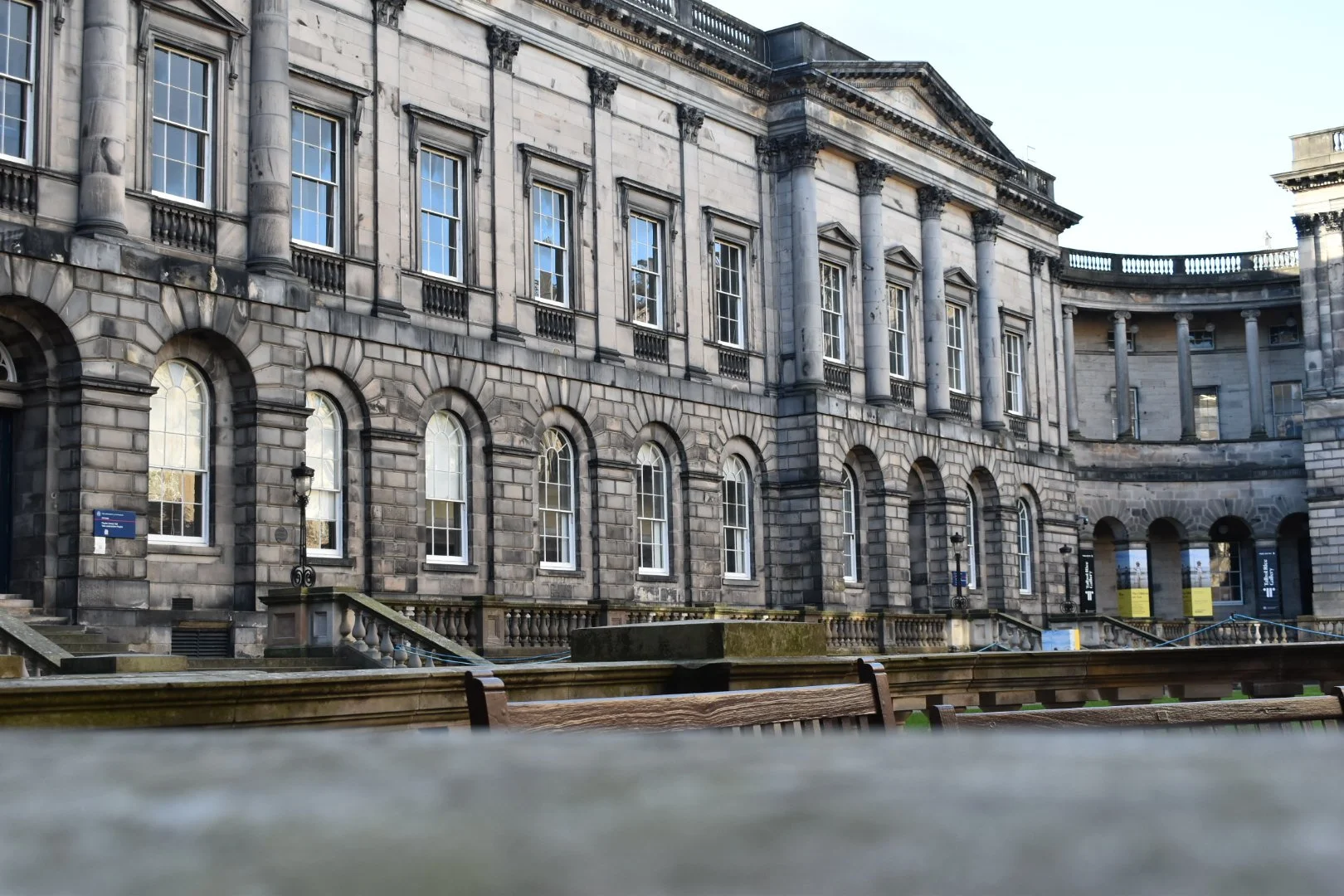
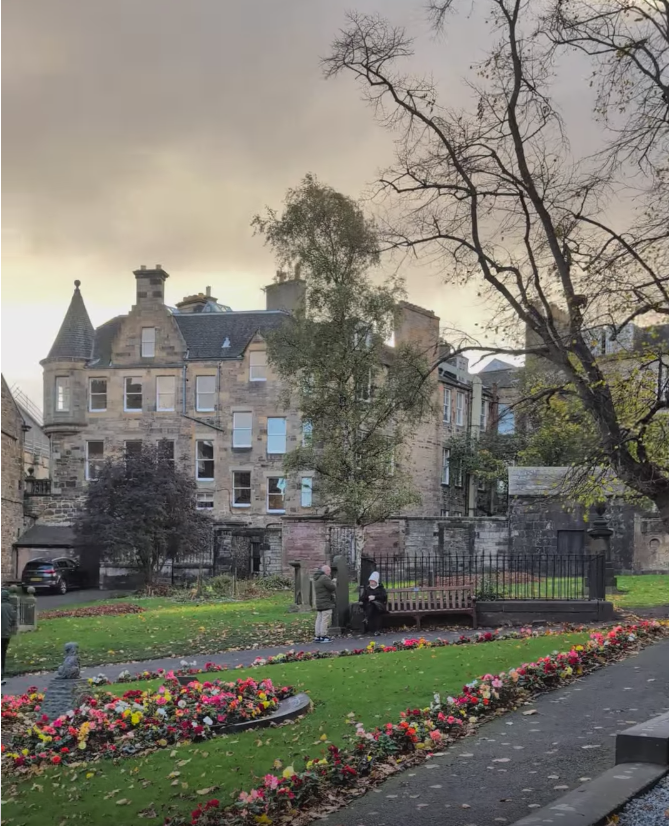
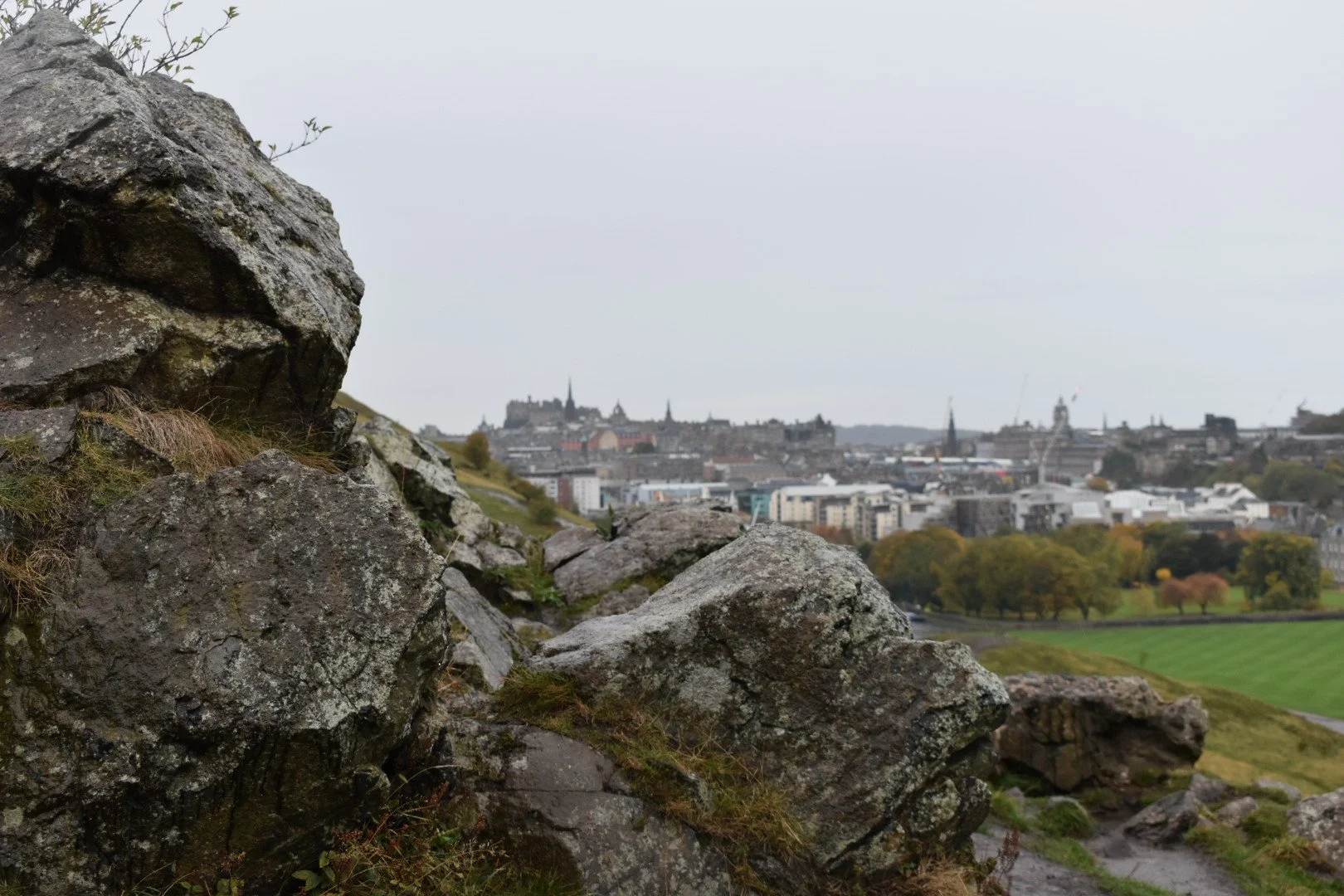
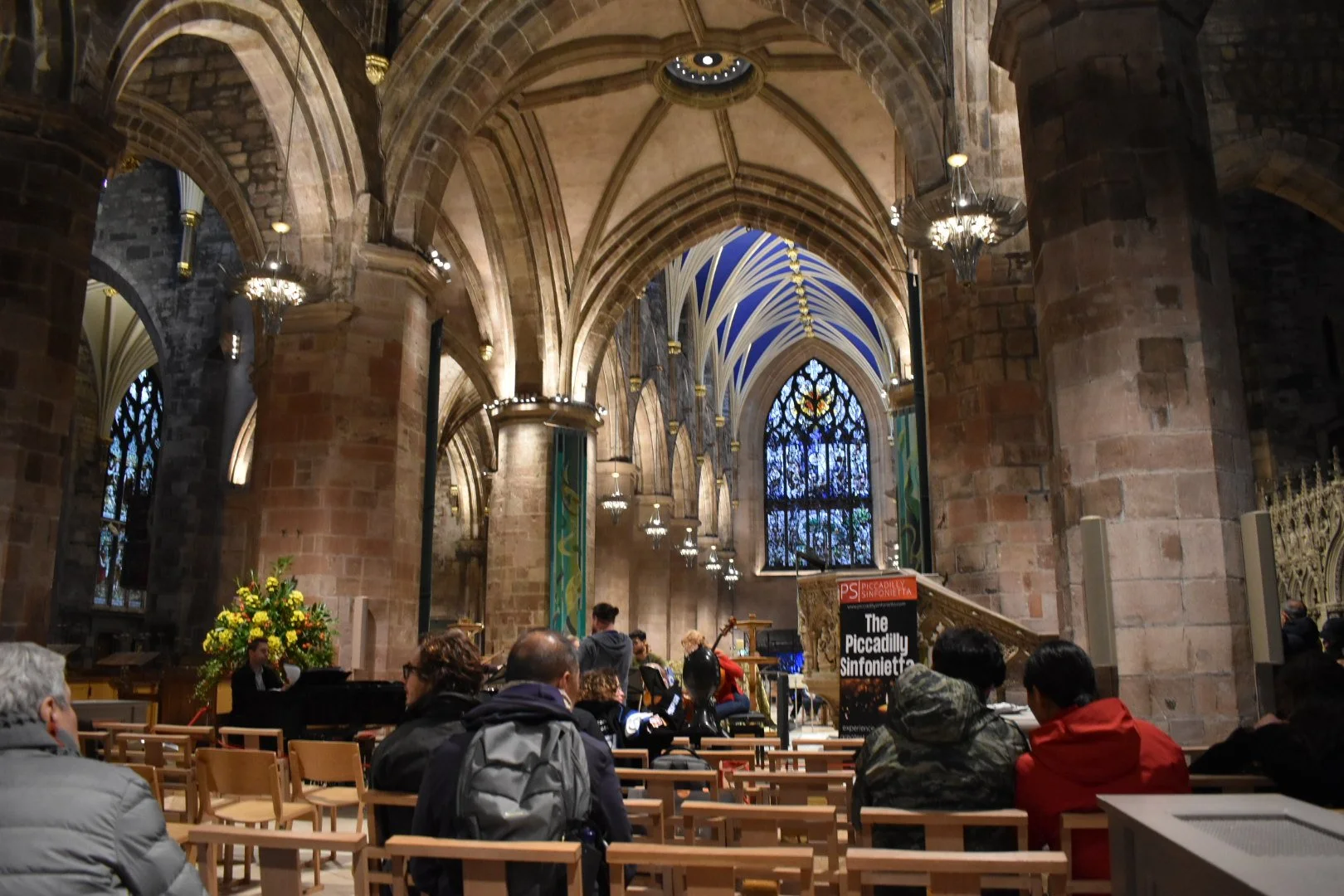
It’s a crisp November morning in old Haarlem, a town just outside Amsterdam, complete with windmills, canals, and all the Dutch charm you can imagine.
Bicycles zip past in orderly chaos over the cobblestones. A booming gong of bells comes from the towering church in the center of town, the market square. The stalls crowd the square for it’s market day and the treats abound. Start by grabbing a coffee and a Stroop Waffle.
You have already booked your tickets in advance to visit the ten Boom house, so you’ll plan your day around your tour time.
Chocolate in hand, stroll around the corner to Greyfriar’s Kirkyard (churchyard) and walk among the headstones for a bit. This church opened its doors on Christmas Day, 1620, which is about one month after the Mayflower landed with 100 pilgrims in the New World. Stepping around a graveyard is a humbling experience, all at once pulling us into the past and nudging us toward our own future. Make your way, slowly, to the back section, and you can find a burial spot that no one else, unless they are also on this mini-retreat, will be visiting — that of Jane Borthwick. She is the beautiful, anonymous young woman who translated Be Still My Soul, making it available to her Scottish homeland in 1855. (Jane was mentioned above in the song section.)
As you look, you will hear people around you murmuring “Harry Potter” and here’s why. This churchyard is said to be a place where J.K. Rowling picked up a few of her character names like Tom Riddle and McGonagall. While not a confirmed fact, tour guides have certainly made the most of the opportunity. You will see the groups gathered near the back wrought iron fence, just behind Jane’s grave. There looms the towering stone school, George Heriot’s, supposedly the place Rowling’s children attended, and the inspiration for Hogwarts. She did, in fact, work on the original manuscript in a nearby cafe, now a pilgrimage site all its own.
Let’s head now a bit north toward the National Galleries. It’s about a 20 minute walk, with lots to take in along the way so take your time. You will not regret purchasing a wide Scottish Tartan wrap scarf, available everywhere you turn, so that you might display it over your sofa at home during the Christmas season. If you happen to see a charity shop or church rummage sale, make sure to grab an old book or relic that has seen years of Scottish life.
As you walk, imagine all who walked these same streets before you. Or ran, as in the case of the aforementioned Eric Liddell. In the 1920s, he could be seen racing city buses from the sidewalk as he attended Edinburgh University. Another year, you might have brushed arms with Edinburgh natives like Alexander Graham Bell, Robert Lewis Stevenson, or hymn-writer Elizabeth Cephlane. Artists like James Guthrie, mentioned above, would have passed by too, perhaps carrying his art kit and a sketchbook.
Speaking of which, if you’re so inclined, rest on a bench for a moment and sketch part of a scene in front of you. Quick, messy lines will do. You’ll look back later and be glad you did.
The National Galleries of Scotland will be the perfect place to step in from the cold and enjoy a little art. You will find it very nicely laid out, intuitively directing you toward paintings that feel, and are, Scottish. Admission is free, so you will be at liberty to stay as long or short as suits you.
An advertising banner near the front might feature an enlarged image of The Hind’s Daughter by Sir James Guthrie, which will do its job of drawing you in. Its the style of art that feels sure of itself, and might make you think — I’d like to paint like that. The original is just up ahead.
Progress through the gallery halls. If you see a painting that really draws you in, pause and read more about the artist. Or jot down the artist's name to read more about later so you don’t have to be on your phone. Knowing the story of the art makes it so much more enjoyable.
Once you begin to feel like you’ve seen enough art for the day, make your way toward the exit. Museums are best departed on a high note rather than in exhaustion. But wait — don’t leave without stopping in the gift-shop! Grab a postcard of the art piece that was your favorite. You will love using this as a bookmark back home, or framing it for your wall as a memory of this illuminating visit.
Time to head back out. There’s Franco Manca sourdough pizza nearby if needed. Enjoy the day, rambling around town, feeling blessed by the beauty. If you’re able to squeeze in time for a meal at the Sheep Heid Inn (14th Century!) followed by a hike over Arthur’s Seat (or vice versa), you won’t be sorry, unless it’s cold and raining. And even then, you won’t be too sorry.
If you have traceable Scottish ancestry, you will love incorporating a bit of that into your day. It’s remarkable to imagine walking the same roads as those who you came from, the lives that led to yours. And consider jotting down a few notes from your day, journal entries that the generations after you might enjoy.
And if there is, by chance, a candlelight concert scheduled for the evening at the famous St. Giles Cathedral (the church of John Knox, who is buried in the parking lot), make absolutely sure you go.
Edinburgh, Scotland
Isn’t it splendid to think of all the things there are to find out about? It just makes me feel glad to be alive—it’s such an interesting world. It wouldn’t be half so interesting if we knew all about everything, would it? There’d be no scope for imagination then, would there?
-Anne of Green Gables, by Lucy M. Montgomery
Studio Table
Scottish Tartan Art
Today we’re making a simple tartan pattern. Feel free to use your own colors or replicate what we have here. Don’t worry about perfectly straight lines. Embrace the mark of the maker. The handmade look is beautiful.
If interested, read more on the history of tartan here.
Project Instructions
Use the arrows to scroll through
-
![]()
Gather Supplies
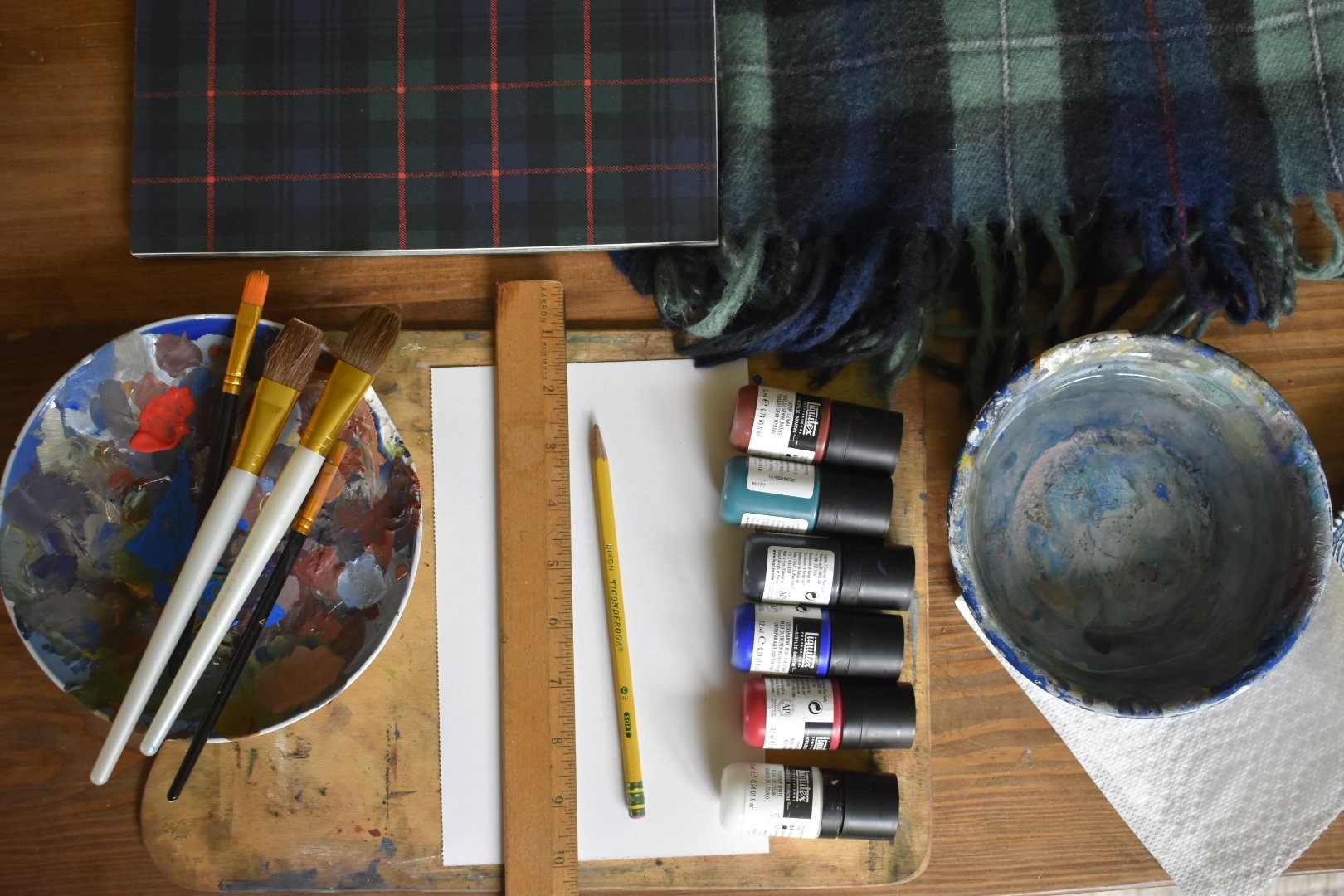
Thick Paper, 2 Brushes: 1 wide, 1 thin, 4 acrylic or gouache paint colors (I used green, navy, red, white), water, optional- ruler and pencil
-
![]()
Sketch Lines
If you’d like, use the ruler to sketch a grid of the size you want. I began this way, but then found it was easier for me to just paint on my grid, as shown in the next photo.
-
![]()
Paint Background & Stripes
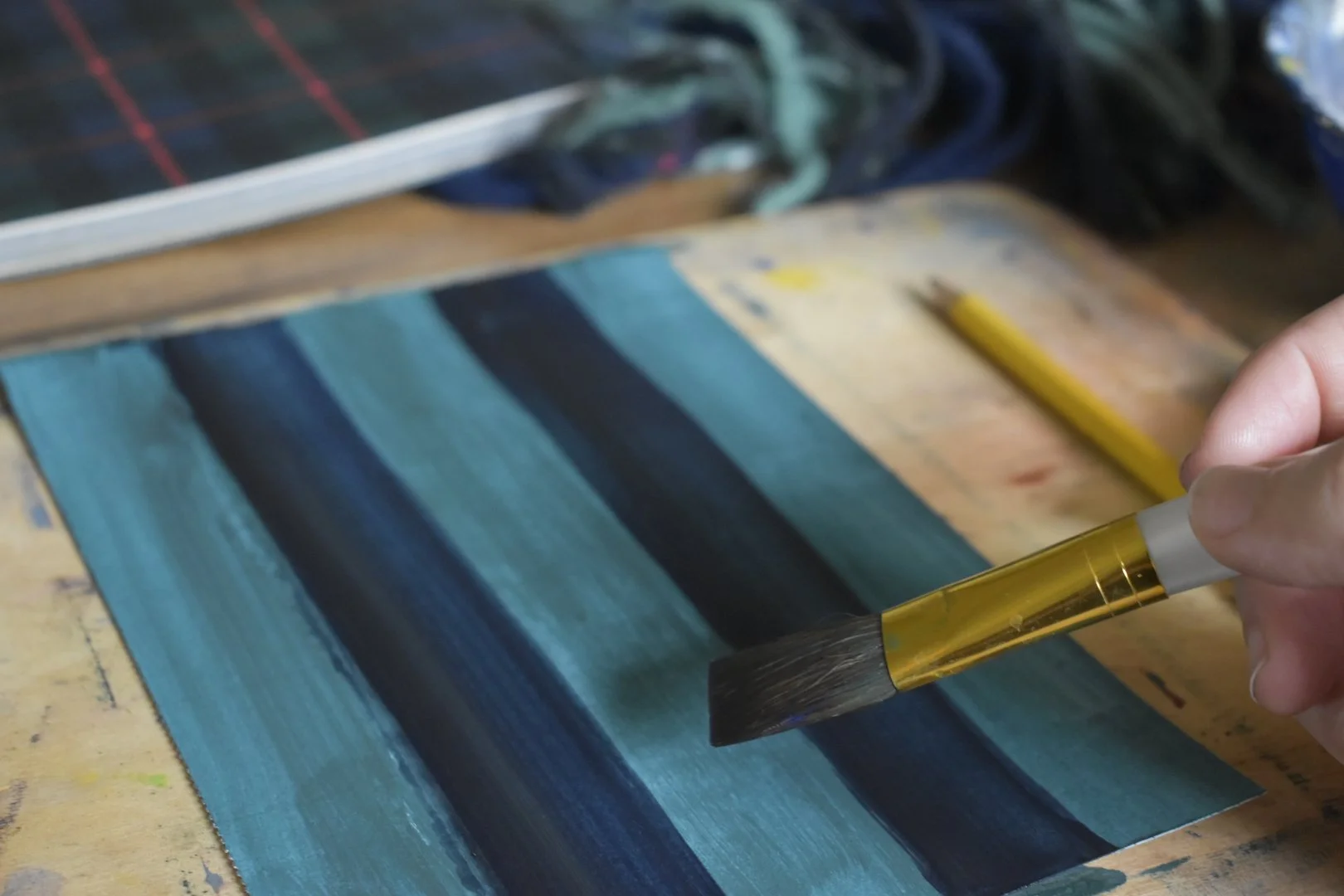
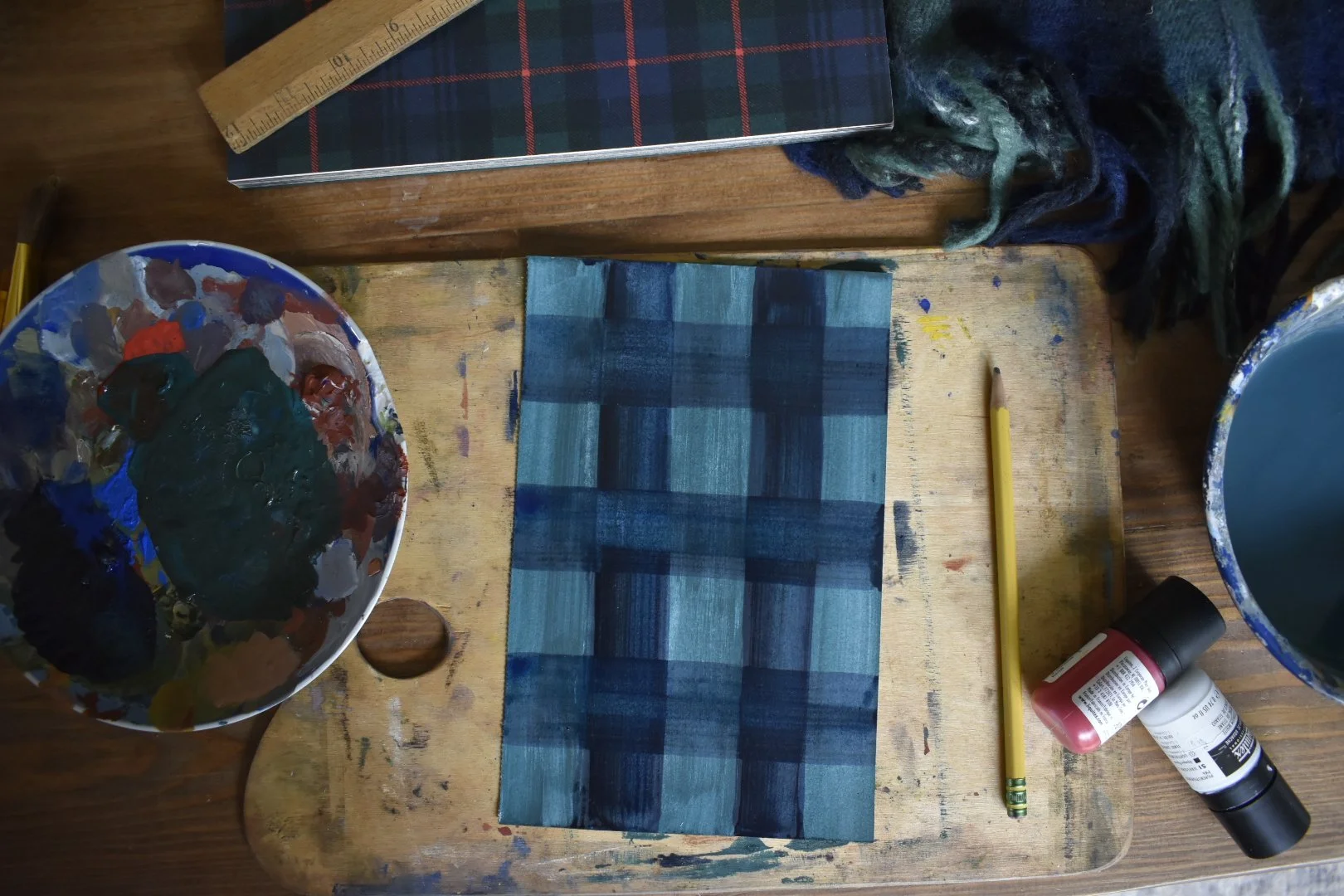
I began by painting the entire background green. Then (disregarding the sketched lines I had made) I simply used the thicker brush and made navy stripes, about 1 inch wide.
-
![]()
Create Plaid Pattern with Navy
Now paint the same stripes horizontally, creating something similar to a large tic-tac-toe board.
-
![]()
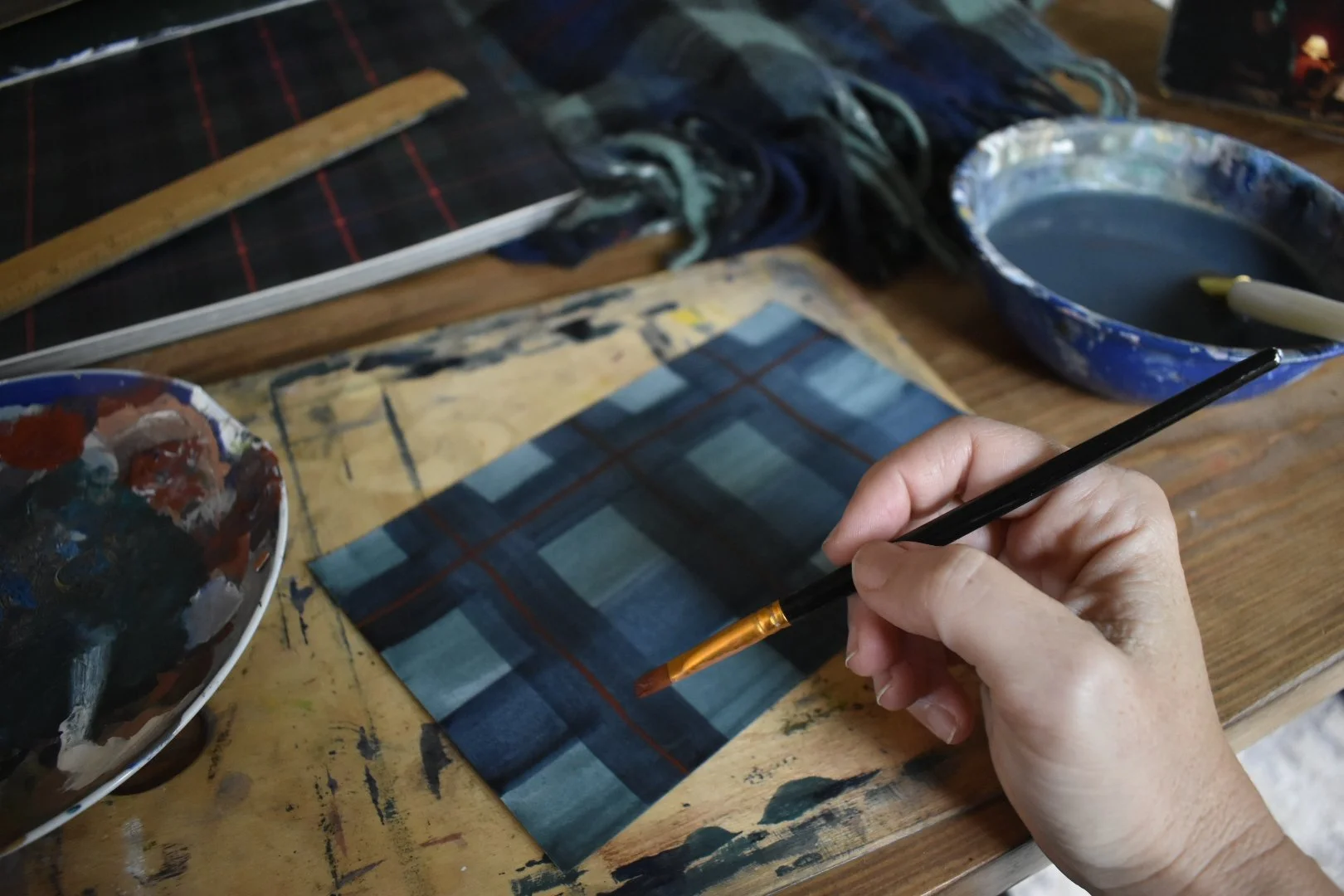
Paint Thin Red Stripes
Now, take the thin brush and paint thin red lines on top of the navy stripes. Embrace the handmade look, the mark of the maker!
-
![]()
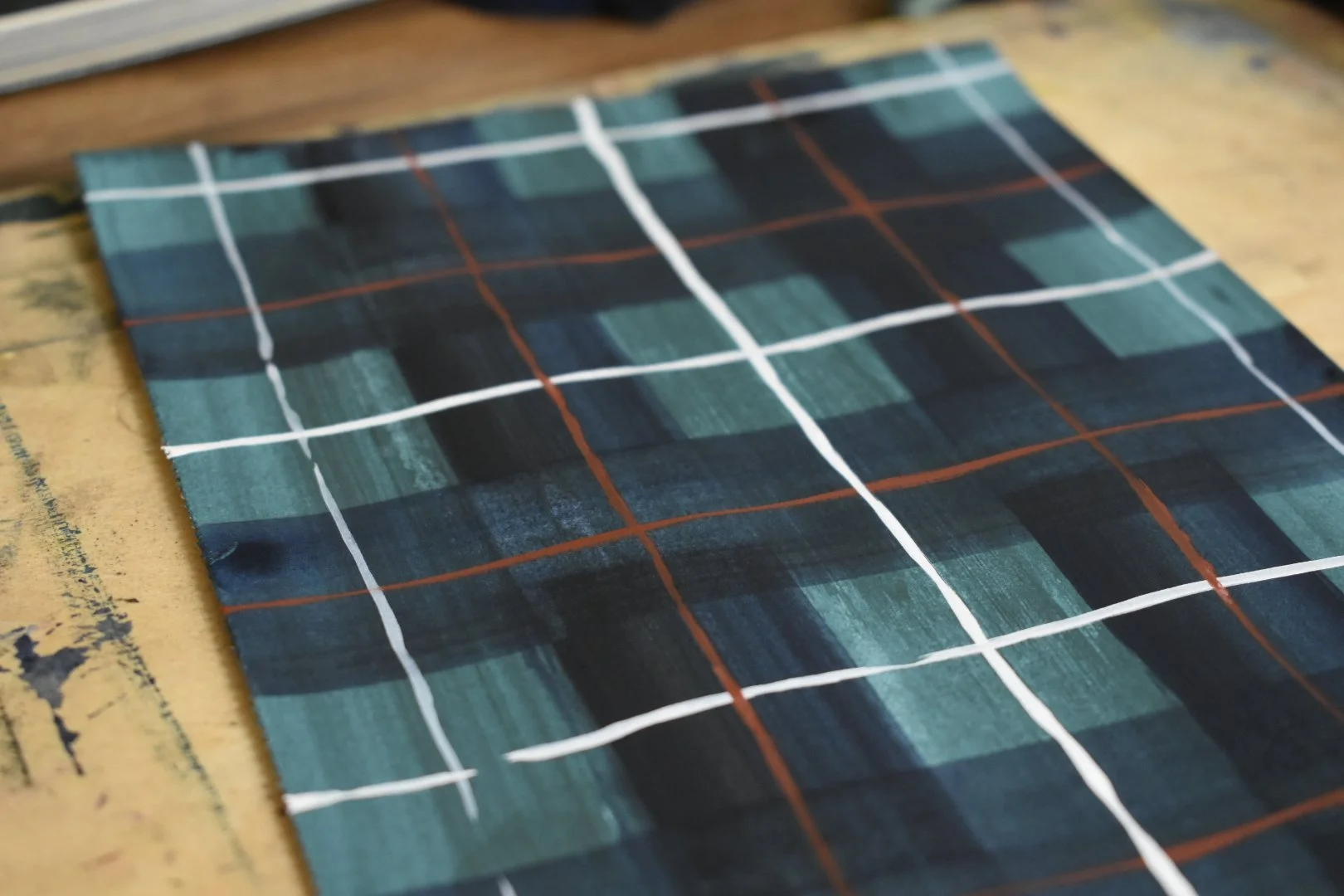
Paint Thin Crossed Lines
Now paint thin white lines that intersect over each green section.
-
![]()
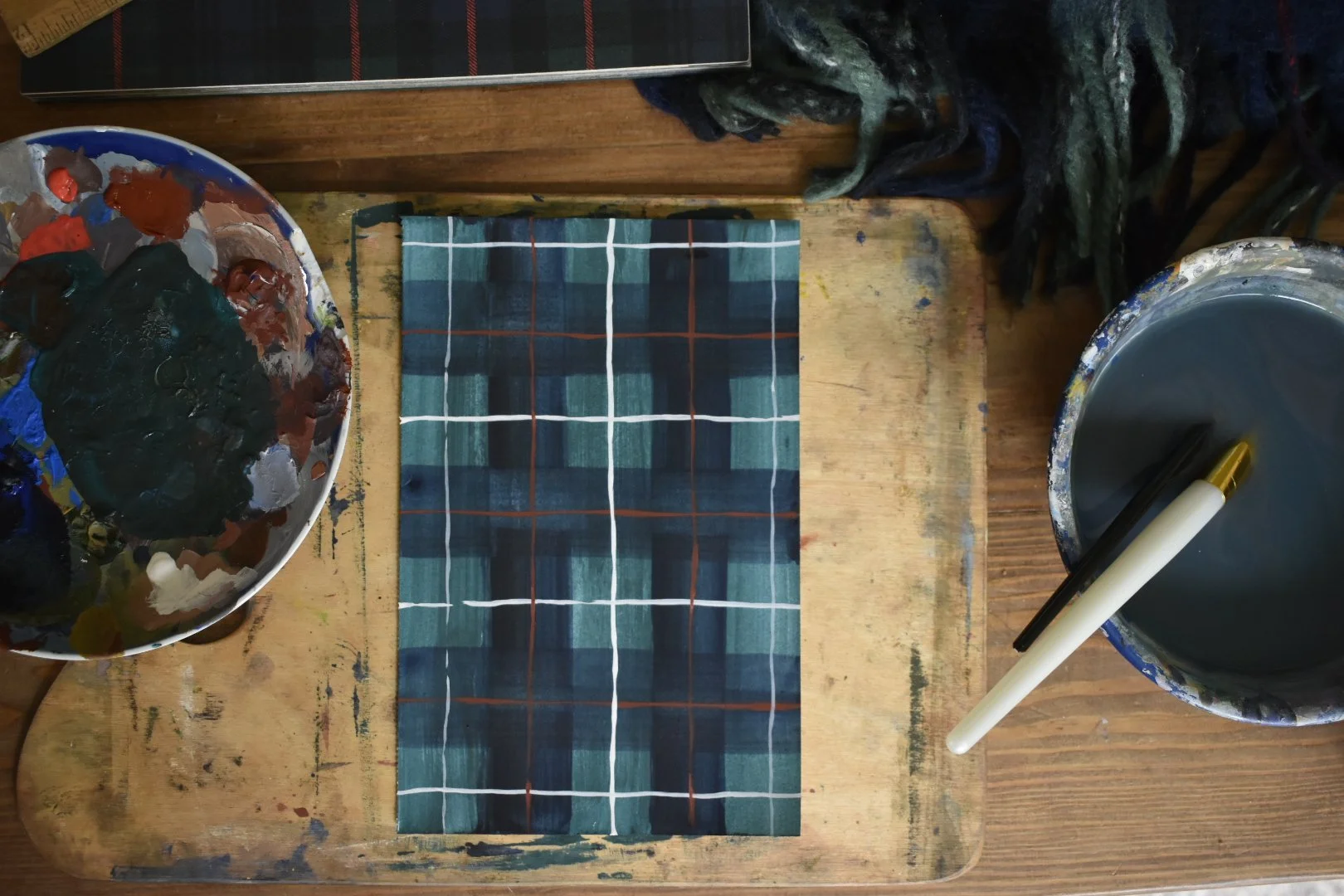
Enjoy your Tartan
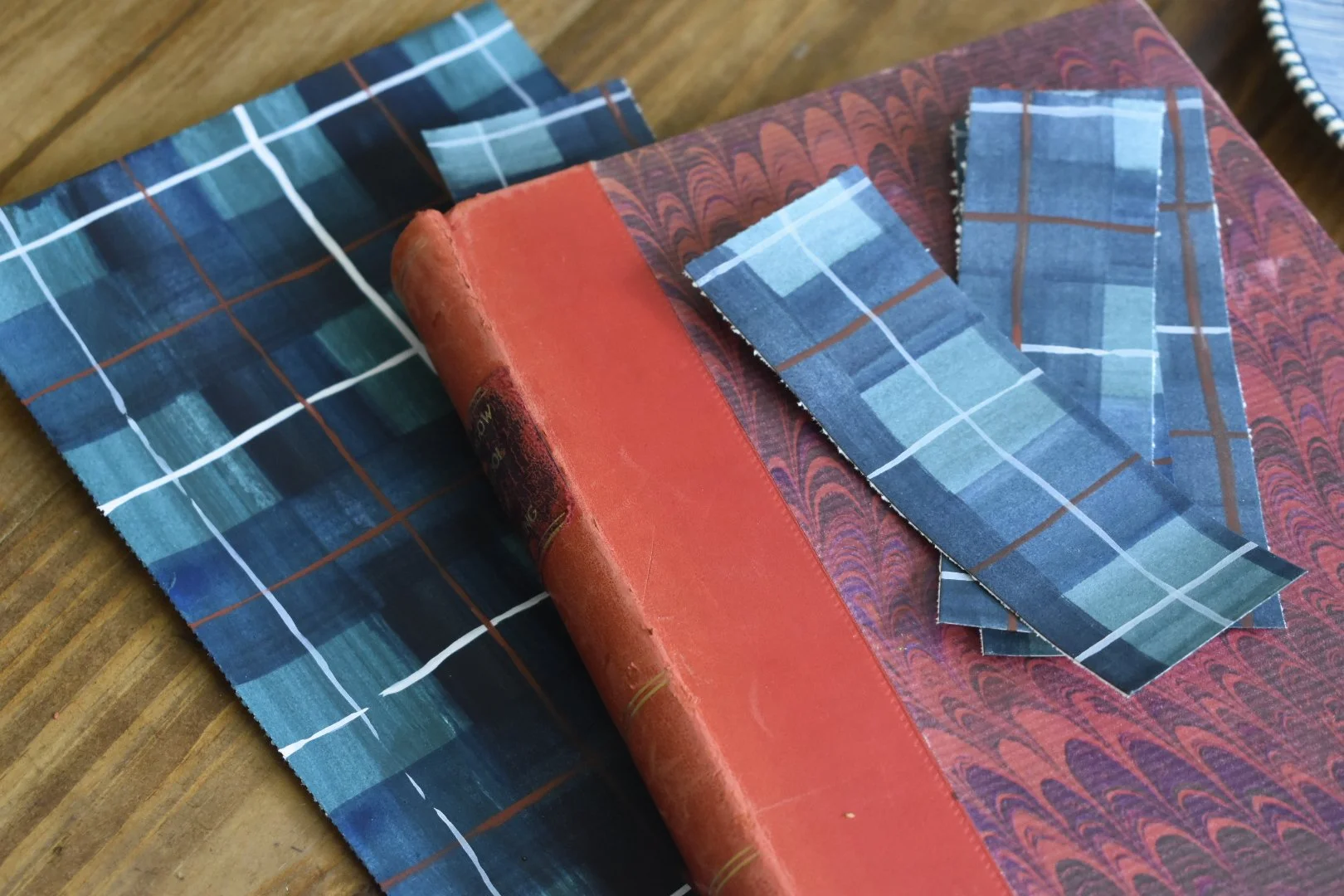
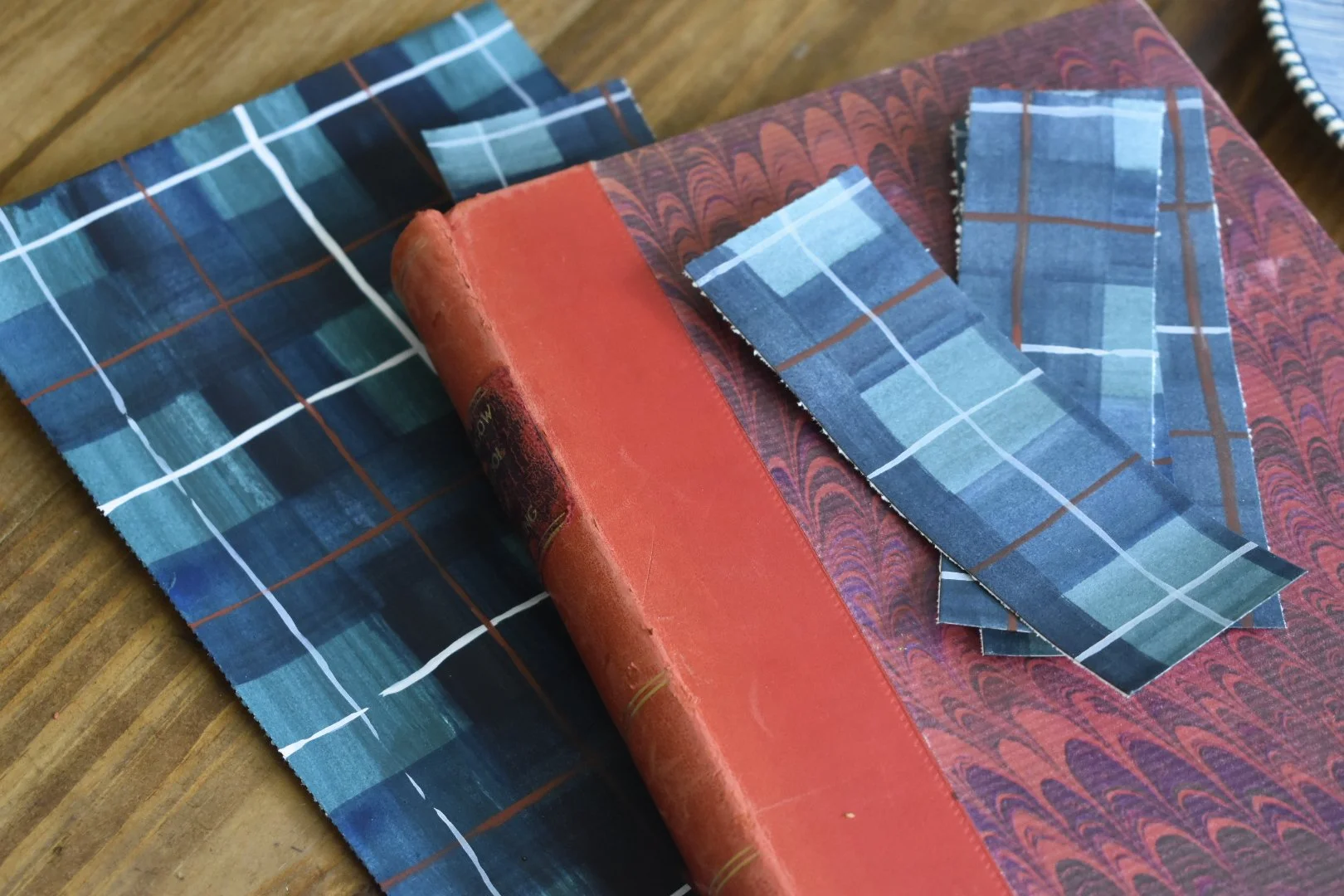
Think of a creative way you can use your Tartan pattern - maybe a frame mat with a black and white photo on top, Or slice it up to create Tartan bookmarks.
-
![]()
Bookmarks
To create bookmarks, cut your paper into even strips.

Monthly Reset
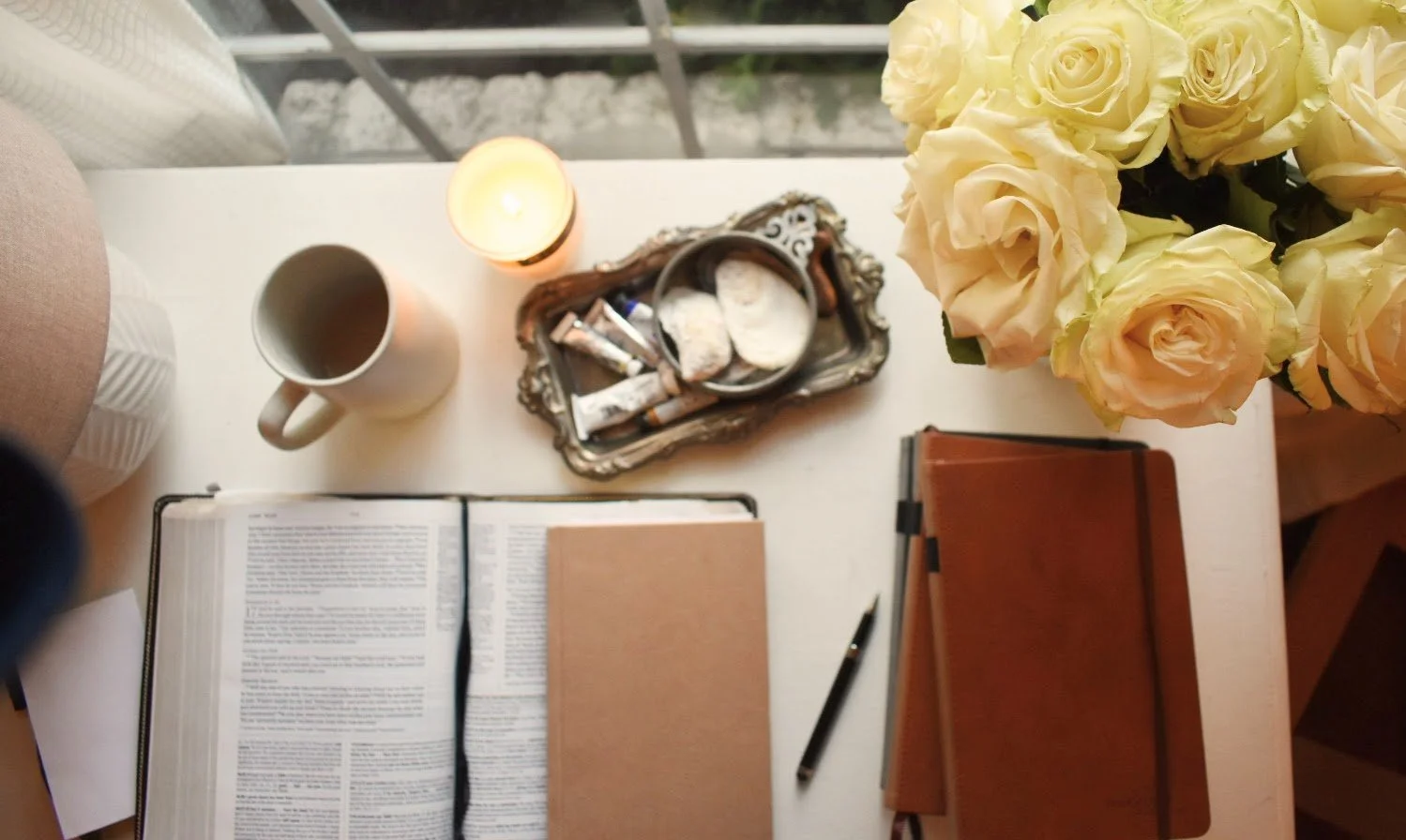
To begin wrapping up your mini-retreat, scroll through the questions and prompts below to help recast vision for the month. Record responses in your journal.
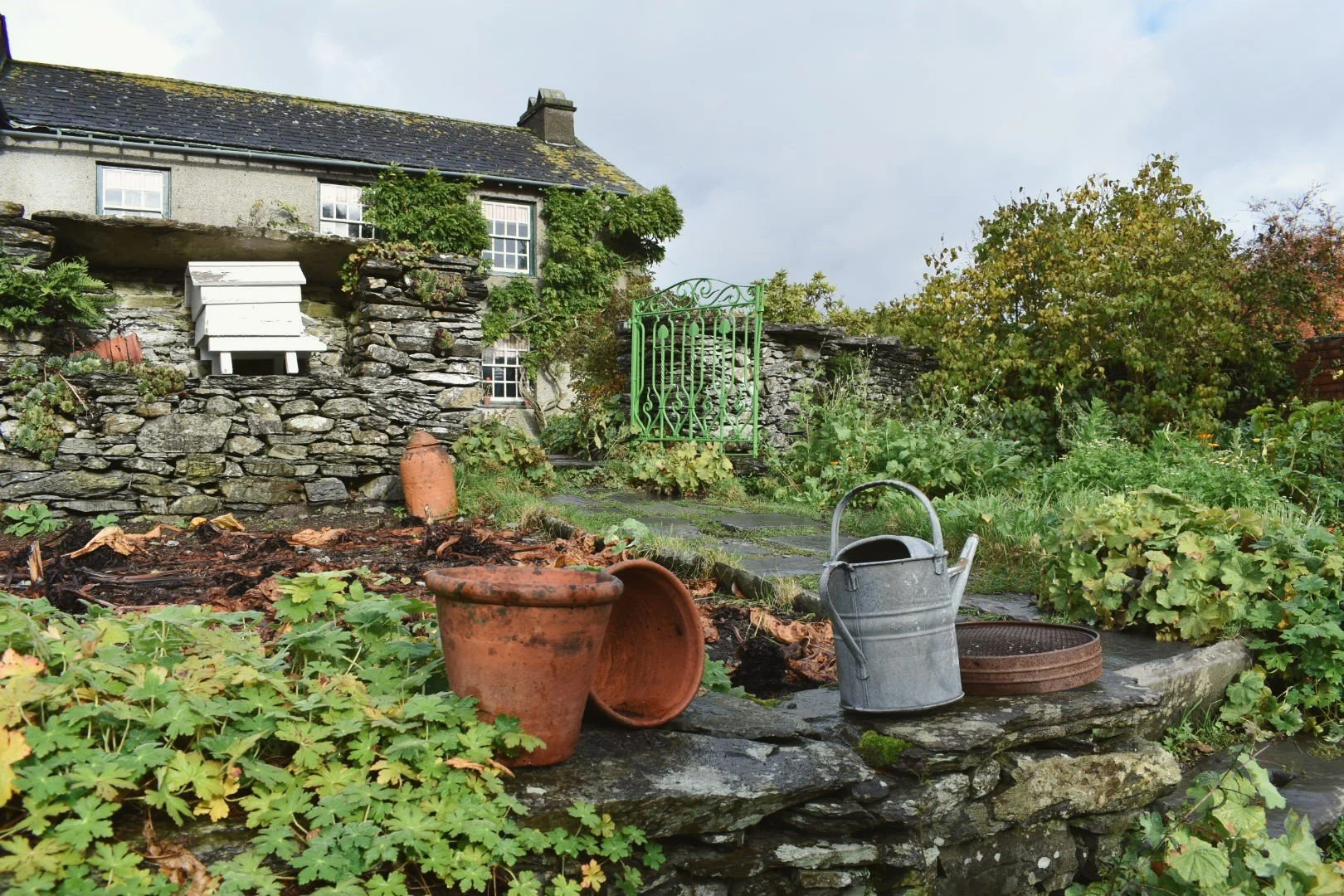
End your retreat with a 20-minute walk around your neighborhood
Listen to Be Still My Soul, peaceful music, or walk in quiet.
Psalm 62:5
For God alone, O my soul, wait in silence,
for my hope is from him.
Notes and Sources
Hymn Lyrics can be found here.
Liddell, Eric. The Disciplines of the Christian Life. London: Triangle, 1985
Hamilton, Duncan. For the Glory: Eric Liddell's Journey from Olympic Champion to Modern Martyr. New York: Penguin Press, 2016.
Get a sense of the Edinburgh streets in this video.
May the Lord bless you and Keep you as you go
"that you, being rooted and grounded in love, may have strength to comprehend with all the saints what is the breadth and length and height and depth, and to know the love of Christ that surpasses knowledge, that you may be filled with all the fullness of God."
-the Apostle Paul in Ephesians 3
gift shop